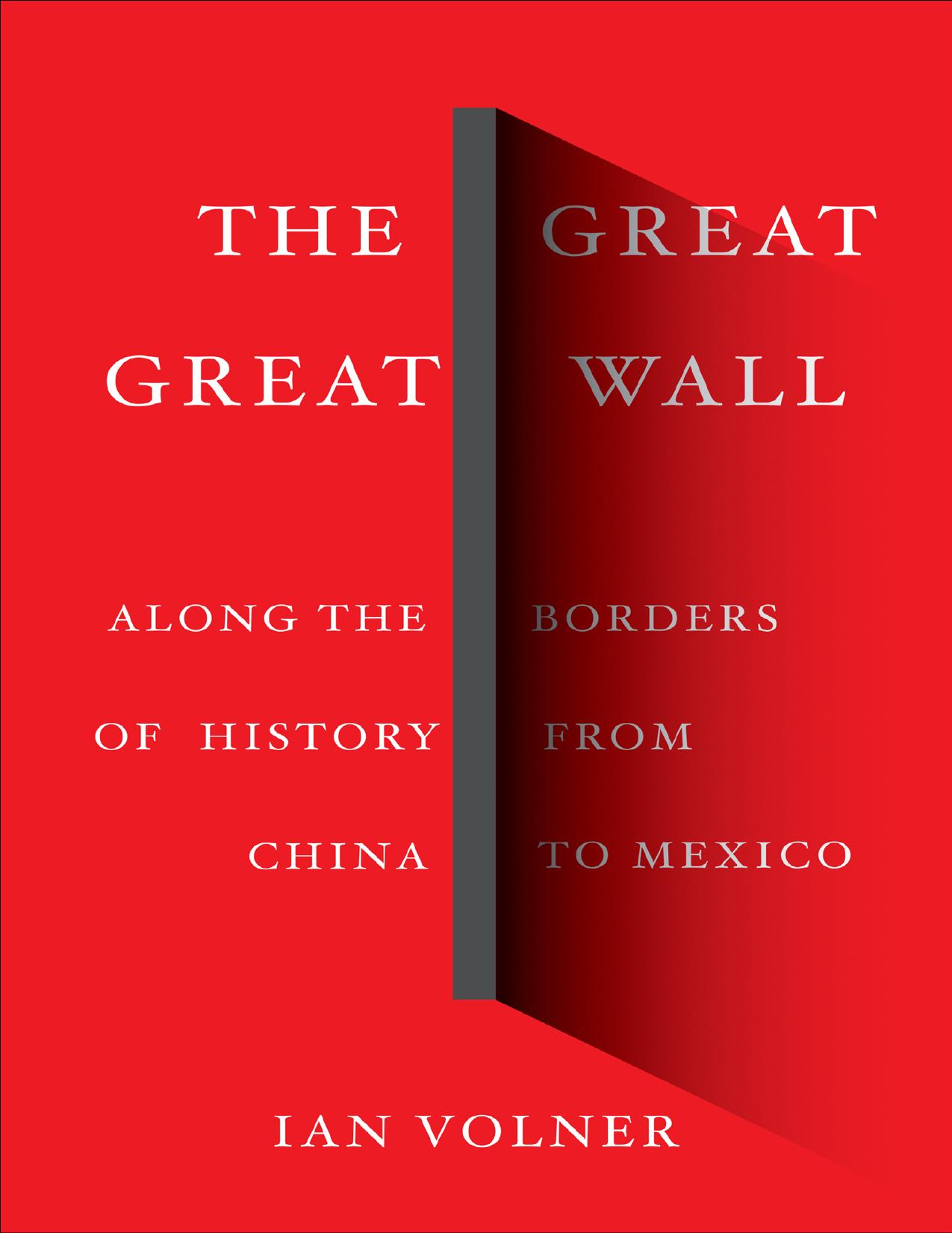
The Great Great Wall by Ian Volner
Author:Ian Volner
Language: eng
Format: epub, pdf
Publisher: Abrams
Published: 2019-06-12T16:00:00+00:00
V
CONSTRUCTING THE NORMAL
BERLIN
The Berlin Wall was born at a garden party and died at a press conference. That the two events bookending its remarkable existence should be so banal in themselves has only tended to make those moments all the more intriguing: How could such a consequential structure have come about, and then suddenly ceased, attended by little or no ceremony, and at the will of such a small number of historical actors? No matter how often the stories are told and retold, they still seem incredible. They bear retelling at least once more.
Following the post–World War II partition of the country by the victorious Allies, there commenced a mass exodus of citizenry from the Soviet-dominated German Democratic Republic (GDR) to the US-aligned Federal Republic of Germany (FRG) via the nearly nine-hundred-mile inner German border, amounting to roughly three and a half million people by 1961. As that boundary had become increasingly fortified over the previous decade, almost 90 percent of those refugees were now crossing over from within the former Nazi capital, located wholly within the GDR but with one half of it occupied by the Western powers. Those fleeing cited various reasons for wishing to enter the de facto FRG exclave of West Berlin, ranging from economic opportunity to educational prospects to family ties, but all shared a similar profile, being predominantly young and high-skilled. Faced with a critical brain drain, GDR leader Walter Ulbricht made a drastic decision, calling together a group of his fellow functionaries at a small gathering in the backyard of his rural villa and announcing that he was permanently sealing off the western half of the city: “Better safe than sorry,” as he told the Russian ambassador, and to be safer still he barred any of his houseguests from leaving until the process was underway. The group was detained there for the rest of the evening, as Erich Honecker—Ulbricht’s trusted deputy, and later successor—carried out the detailed scheme, ordering sentries to erect roadblocks and unspool 150 tons of barbed wire, totally encircling West Berlin by the following morning, August 13, 1961. In the blink of an eye, and with a nuclear showdown between the global superpowers a very real possibility, the Iron Curtain, first mentioned by Winston Churchill in 1946, went from metaphor to a tangible thing. Meanwhile, the only people who knew what was going on were calmly knocking back beers and canapés in the forest.
Over the ensuing twenty-eight years, Honecker’s ad hoc barrier evolved into an elaborate reinforced-concrete structure and a hated symbol of European division during the Cold War. Amid an atmosphere of increasing liberalization in the late 1980s, travel restrictions began to loosen throughout the Eastern Bloc and increasing numbers of East Germans slipped westward via other Soviet satellite states. The GDR leadership recognized that it had no choice but to permit its citizens to travel between the Berlins, but the details concerning the order were not fully disclosed to Günter Schabowski, an East German government spokesman who appeared
Download
This site does not store any files on its server. We only index and link to content provided by other sites. Please contact the content providers to delete copyright contents if any and email us, we'll remove relevant links or contents immediately.
Cecilia; Or, Memoirs of an Heiress — Volume 1 by Fanny Burney(32635)
The Great Music City by Andrea Baker(32608)
Cecilia; Or, Memoirs of an Heiress — Volume 2 by Fanny Burney(32010)
Cecilia; Or, Memoirs of an Heiress — Volume 3 by Fanny Burney(31996)
We're Going to Need More Wine by Gabrielle Union(19107)
All the Missing Girls by Megan Miranda(16307)
Pimp by Iceberg Slim(14662)
For the Love of Europe by Rick Steves(14562)
Bombshells: Glamour Girls of a Lifetime by Sullivan Steve(14135)
Norse Mythology by Gaiman Neil(13457)
Talking to Strangers by Malcolm Gladwell(13438)
Fifty Shades Freed by E L James(13289)
Mindhunter: Inside the FBI's Elite Serial Crime Unit by John E. Douglas & Mark Olshaker(9418)
Crazy Rich Asians by Kevin Kwan(9345)
The Lost Art of Listening by Michael P. Nichols(7547)
Enlightenment Now: The Case for Reason, Science, Humanism, and Progress by Steven Pinker(7353)
The Four Agreements by Don Miguel Ruiz(6827)
Bad Blood by John Carreyrou(6669)
Weapons of Math Destruction by Cathy O'Neil(6362)
